The Freedom From Hunger Project (FFHP) is an information and outreach effort in support of solving the problem of hunger and malnutrition. FFHP commemorates and furthers the goals of the Freedom From Hunger Campaign (FFHC).
The project seeks to:
Share your ideas and actions here. 
The Freedom From Hunger Campaign (FFHC) was the first concerted global effort to raise the profile of the problem of hunger and malnutrition and possible solutions to that problem. FFHC pioneered relationships between non-governmental organizations, governments, governmental agencies, religious, community and youth groups as well as millions of individuals in the effort to end hunger and poverty.
The Food and Agriculture Organization of the United Nations (FAO) launched FFHC on July 1, 1960. The campaign was conceived by FAO Director-General BR Sen to raise awareness of the problem of hunger and malnutrition and of possible solutions to that problem. FFHC was FAO's main contribution to the First United Nations Development Decade. FFHC stood on three legs: • research, • information/education, • and action. FFHC was a vehicle for the sharing of research information produced by FAO and other agencies and organizations. The Campaign helped disseminate information all around the world, and supported development education initiatives in developed and developing countries. In the context of a world-wide movement toward activism and humanitarianism, FFHC helped mobilize people into action. In many ways the Campaign is still with us today. Many national committees are still in operation, most as independent NGOs, and the message of the Campaign can still be heard in the language of international development and in calls for a broad, sustained, and global approach to the problem. Learn more about FFHC here. We welcome any comments on your involvement in the Campaign, and on your participation in development efforts. Information will by published on this website by permission only. With thanks, Matthew Bunch, PhD Founder, Director Freedom From Hunger Project FFHC TodayFFHC National Committees
The Freedom From Hunger Campaign depended on national committees. Some of these survive today as important development organizations in Australia, Germany, Ireland, Kenya and the United States. |

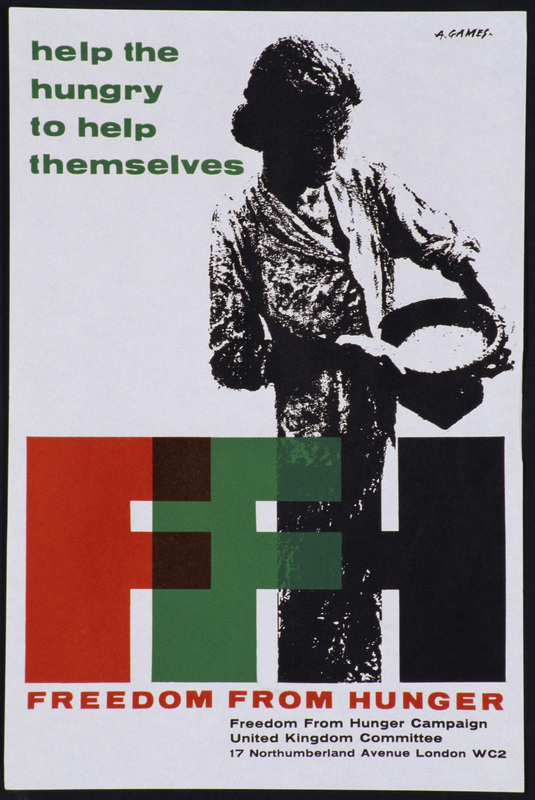
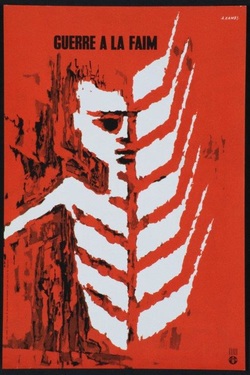
Abram GamesInfluential British designer Abram Games produced promotional materials in support of FFHC. The work reflected his belief in using minimal means to achieve maximum meaning.
Find out more here. 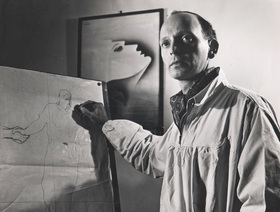
Images courtesy of the Estate of Abram Games and the Food and Agriculture Organization of the United Nations.
The New World Trio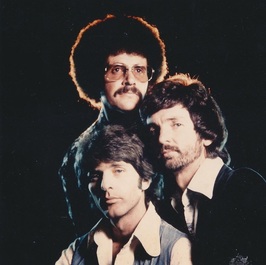
What the World Needs
In 1966 the Australian Folk-Pop group New World Trio recorded the song "What the World Needs" in support of the Australian Freedom From Hunger Campaign. The flipside featured a narration on FFHC by James Smiley. Click here for more information on the song and the New World Trio. Religious LeadersReligious leaders and organizations were instrumental in the success of FFHC. Buddhists, Christians, Jews, Muslims and a host of other faith-based groups supported the campaign and in many cases cooperated to support its goals.
Find out more here. |

The FFHC Stamp Issue and Coin PlanIn 1963, FAO organized the issue of postal stamps to coincide with the First World Food Congress. 153 countries issued FFHC stamps in support of the Campaign; the sale of the stamps raised more than 2 million dollars (USD) that supported six regional and national farm broadcasting seminars. A portion of the fund was later used for publicity efforts.
Download the pdf here. Find out more here. 
World Food Congresses,
|

|
|